 Little Things Made
Baking
Sourdough Bread
The idea
A basic sourdough loaf, made from a starter we keep fed on the counter. It takes two days start to finish once you count feeding the starter and the overnight bulk ferment, but the hands-on time is short — a few minutes of mixing, three quick stretch and folds, and shaping.
If you don't have a starter going yet, here's the kit we used to get ours started: Starter and Kit.
Feeding Your Starter
Makes enough fed starter for 1 loaf
Ingredients
- 60 ml starter
- 90 ml filtered water (tap water doesn't work the same for feeding)
- 100 ml organic bread flour
Method
- Combine the starter, filtered water, and bread flour in your jar and stir until smooth.
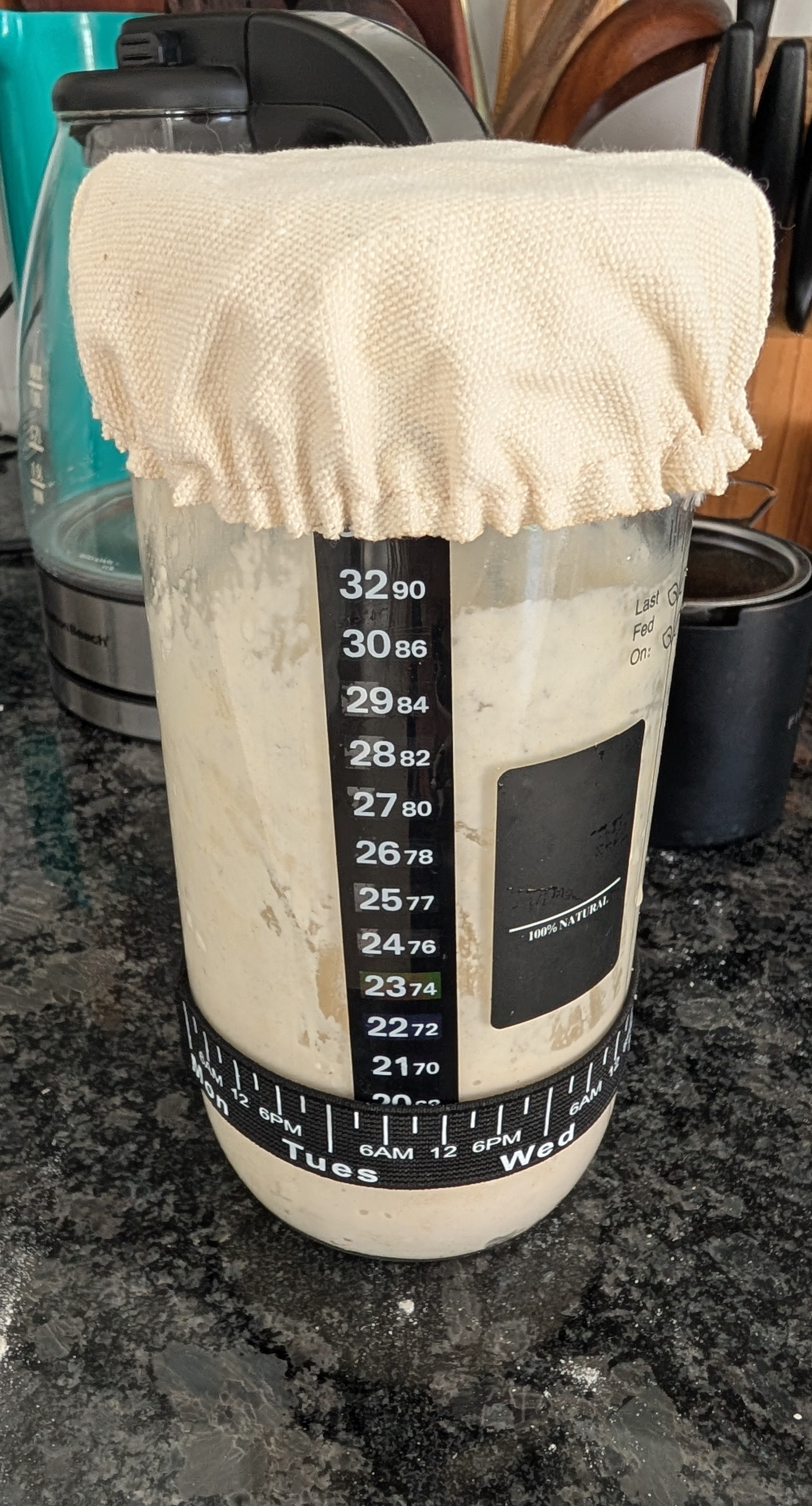
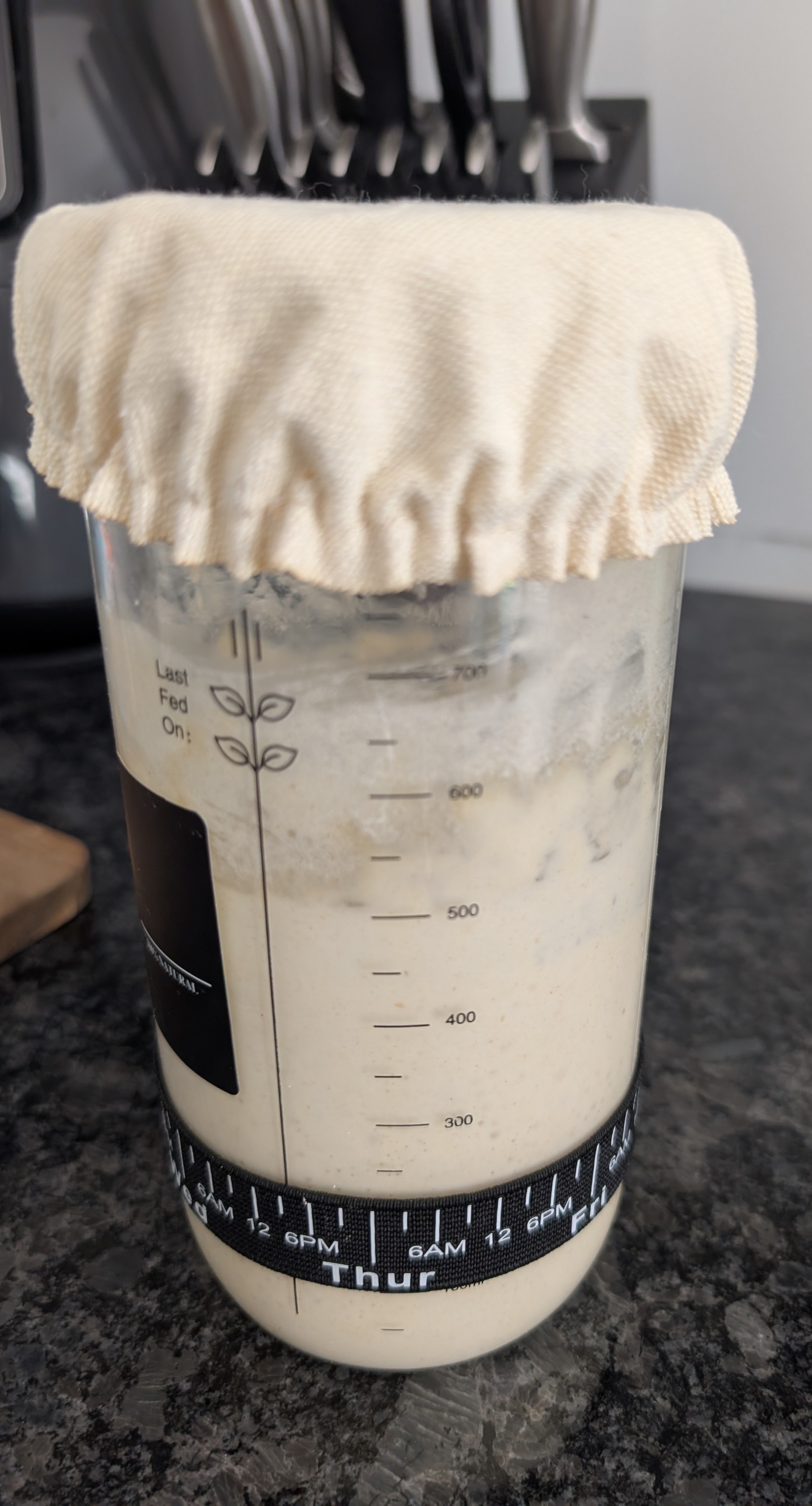
- Let it rise on the counter for about 8 hours, or until doubled in height. Our kitchen sits around 23°C (73°F), which is a good target room temperature.
Sourdough Bread
Ingredients
- ½ cup fed starter
- 4 cups organic bread flour
- 1⅓ cups warm water (tap is fine here)
- 1 tsp salt
- A banneton, for bulk fermenting
Method
- Mix the starter, bread flour, warm water, and salt with a dough whisk until the dough is crumbly.
- Knead by hand for about a minute, until it comes together into one ball. It should be slightly tacky but not sticking to your fingers, and no longer crumbly.
- Cover the bowl with plastic wrap or a damp towel.
- Let it sit for 1 hour, then do the first stretch and fold. Do two more stretch and folds, spaced 1 hour apart.
- Flour your banneton well — it will stick otherwise — then transfer the dough in and let it bulk ferment overnight on the counter.
- The next day, turn the oven on to 450°F.
- Turn the dough out onto parchment paper and score the top to let steam escape, then lower it into a Dutch oven with the lid on.
- Bake covered for 20 minutes, then remove the lid and bake for another 30 minutes.
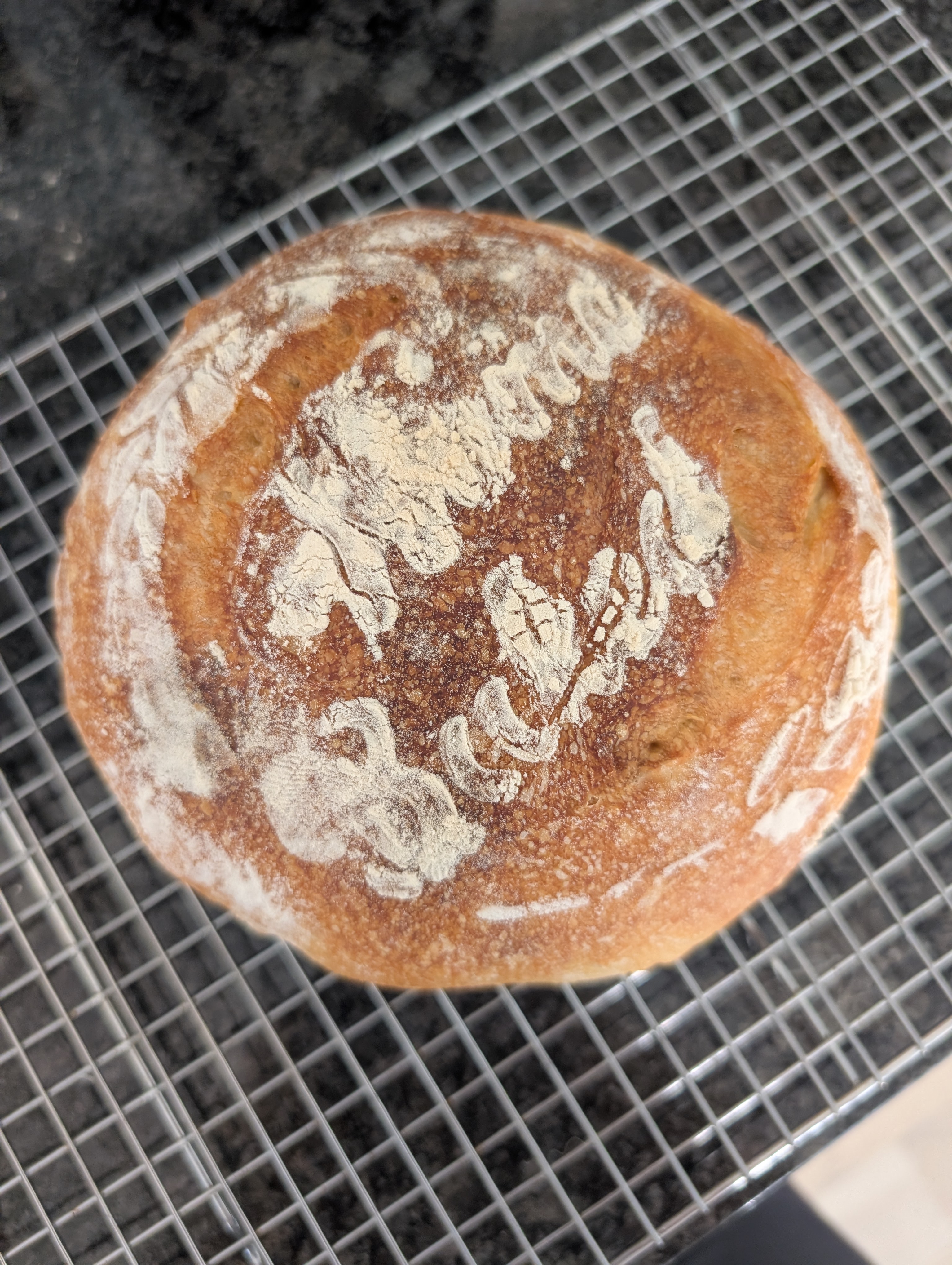
- Let the loaf cool on a rack for 1 hour before slicing.
Worth noting: filtered water matters for feeding the starter itself, but once it's active, regular tap water works fine in the bread dough.
What we did
Feeding the starter is the simplest part — starter, filtered water, and flour stirred together, then left on the counter to double.
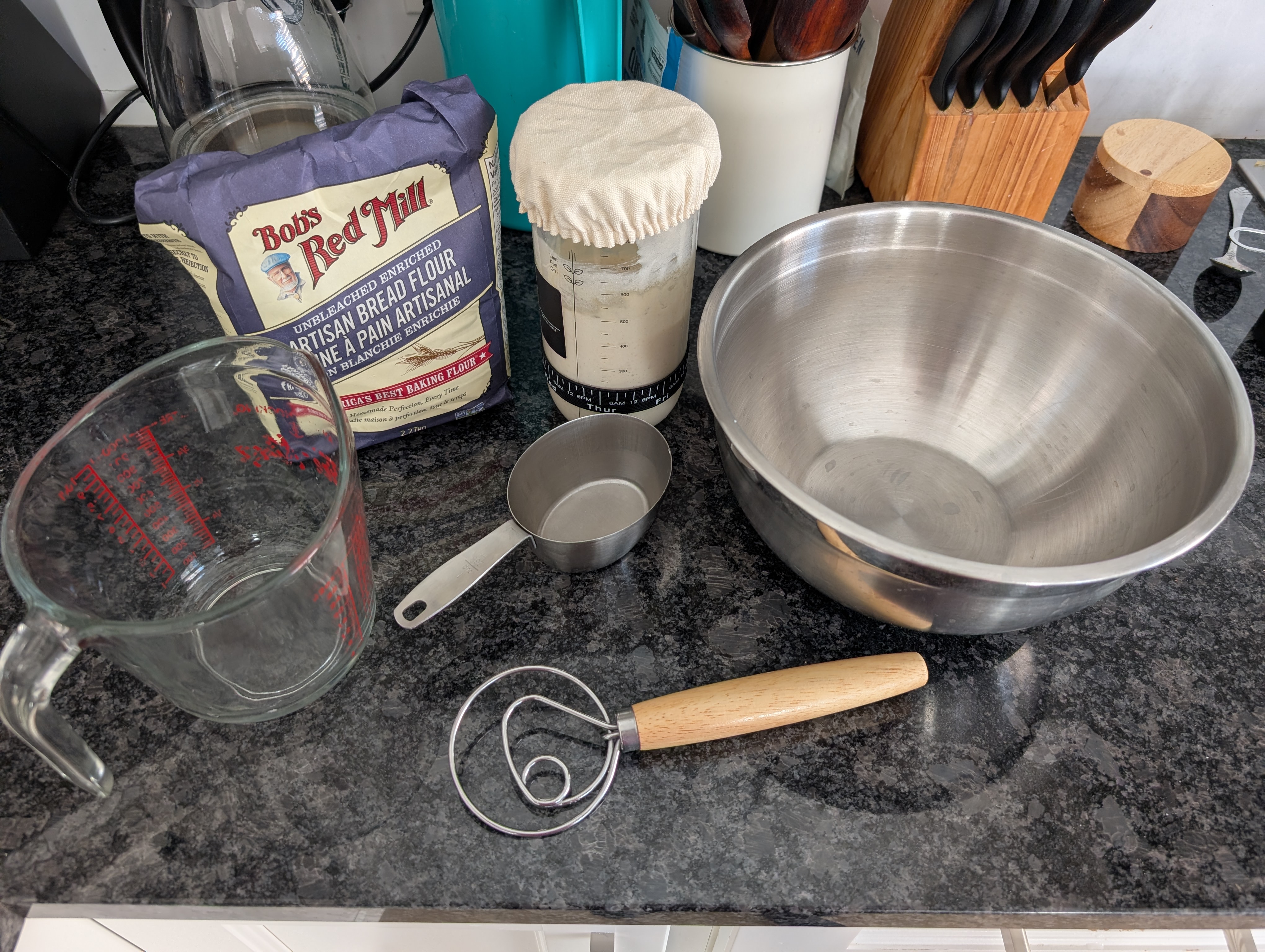
Once the dough is mixed and kneaded into a shaggy ball, it gets three stretch and folds an hour apart, which is what builds the structure without any real kneading.
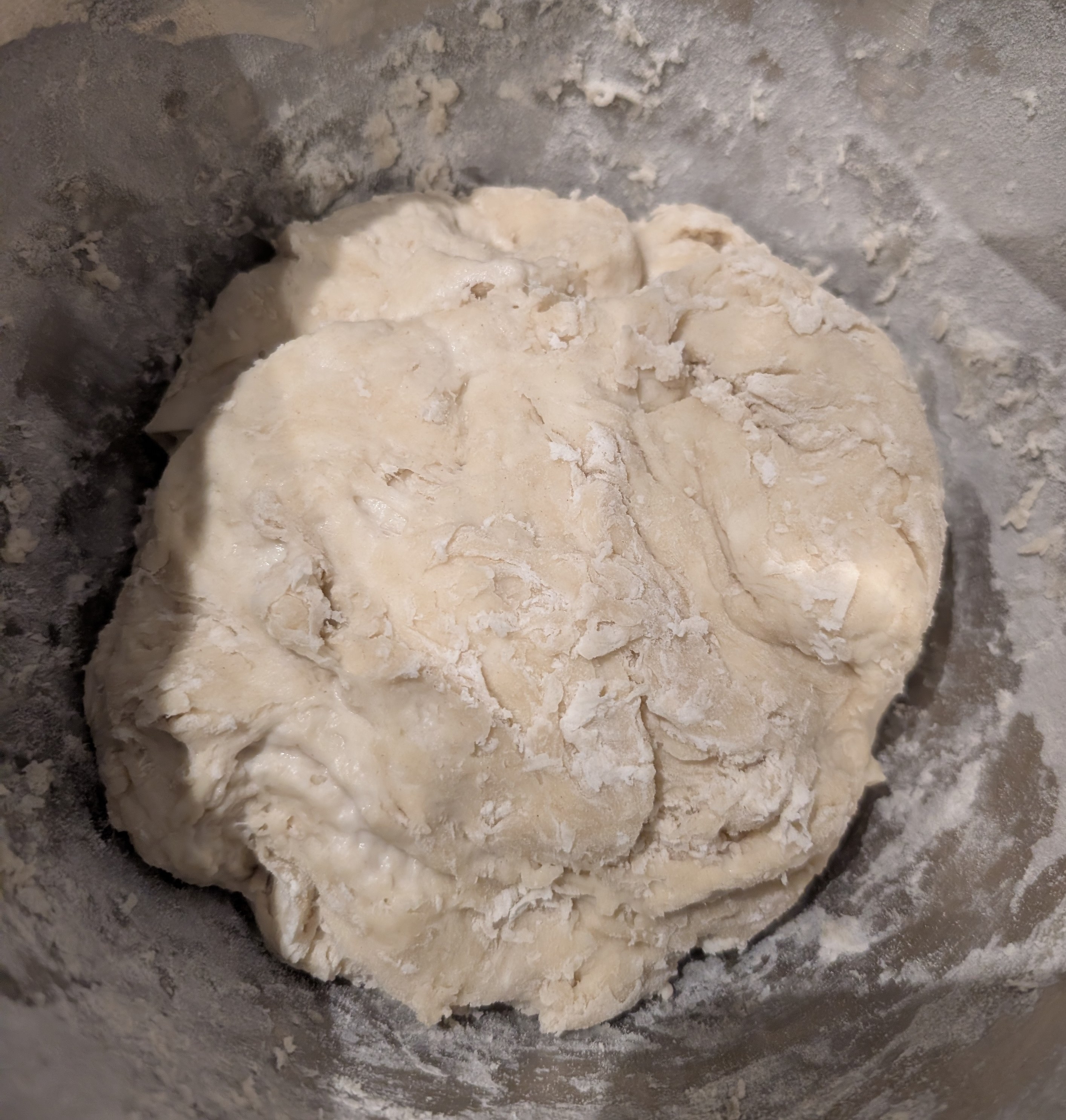
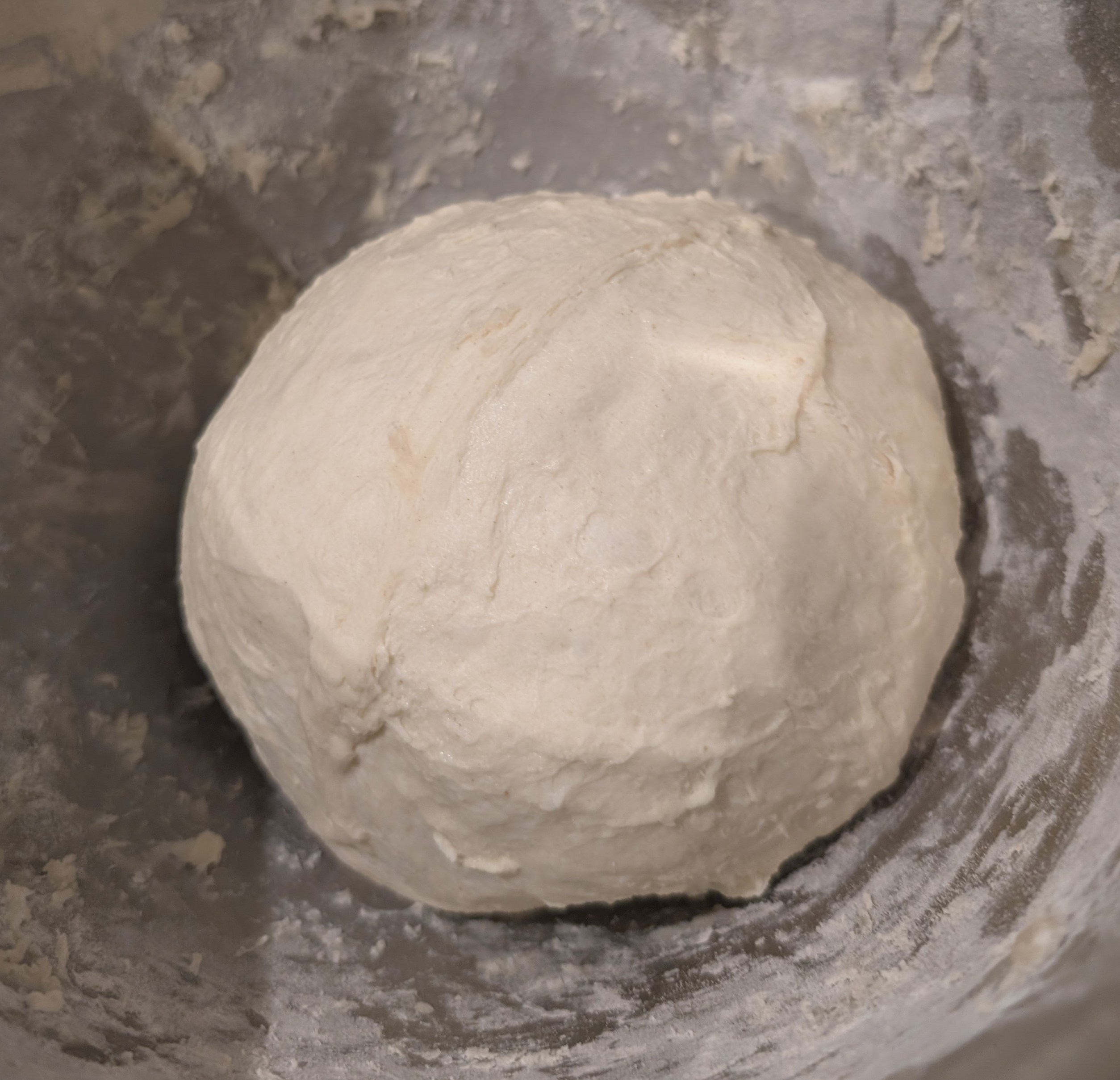
After the third fold, the dough goes into a well-floured banneton to bulk ferment overnight on the counter, then gets scored and baked in a covered Dutch oven the next morning — lid on to trap steam for the first 20 minutes, then off to let the crust brown for the last 30.
Result
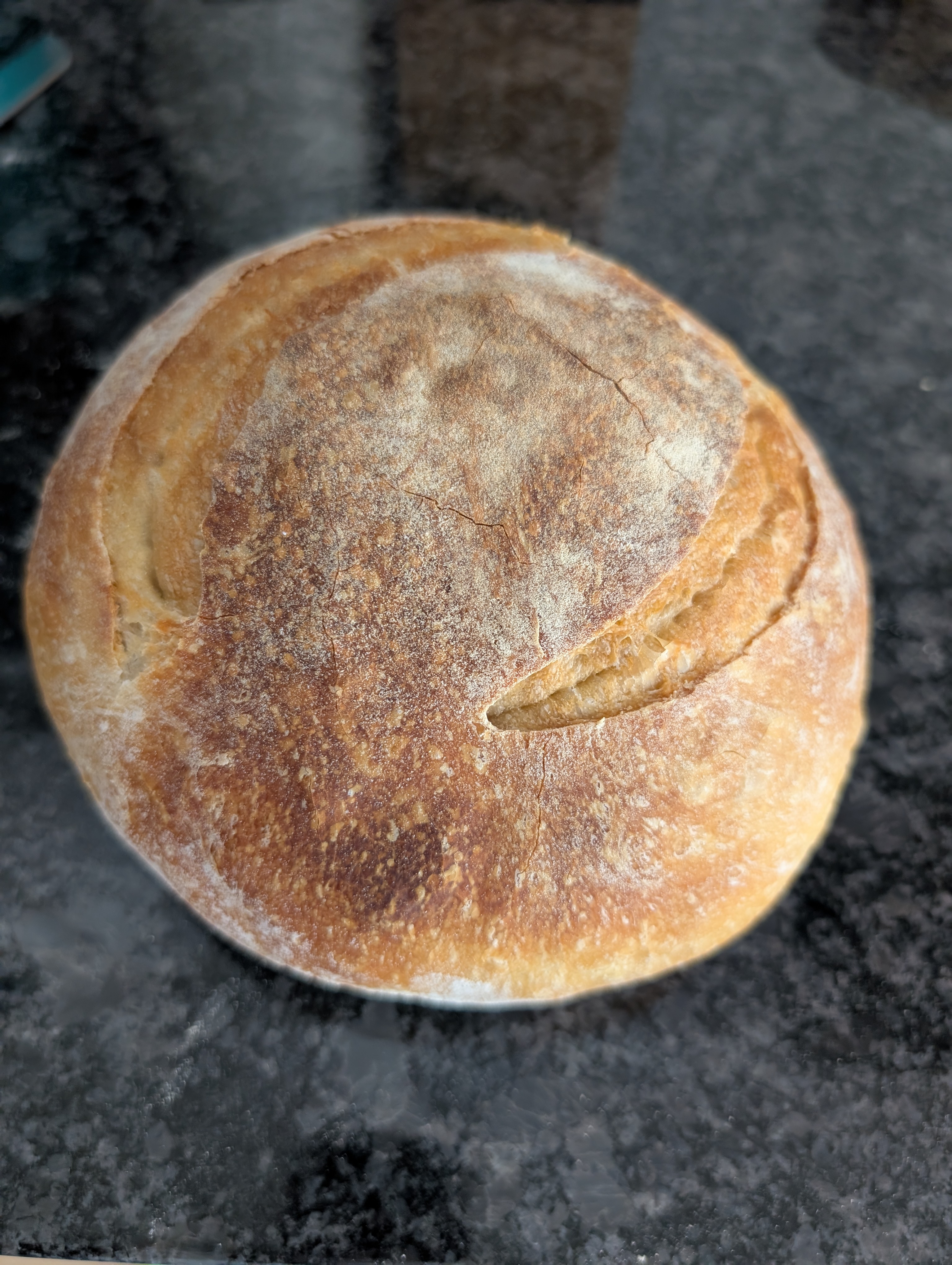
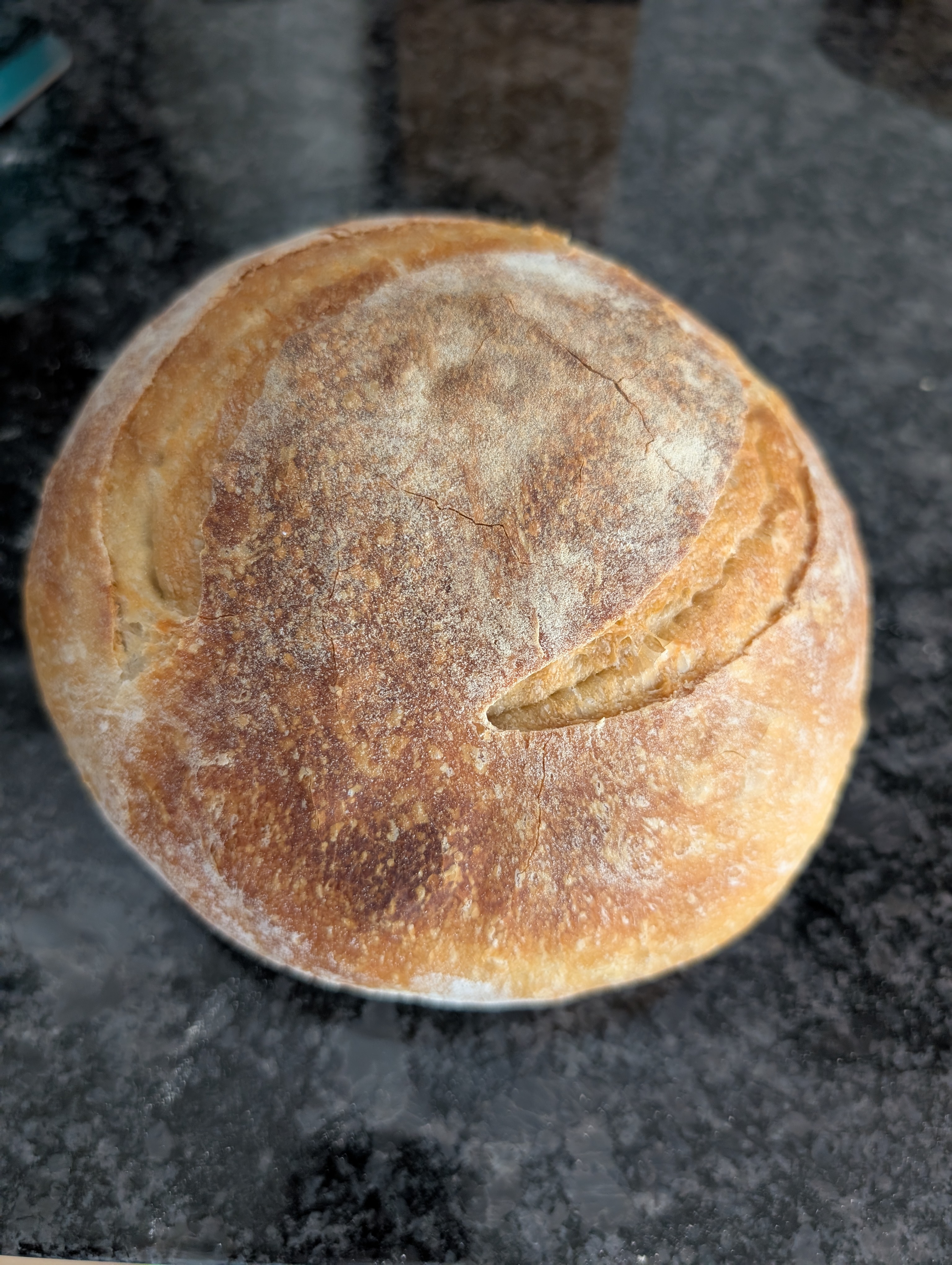
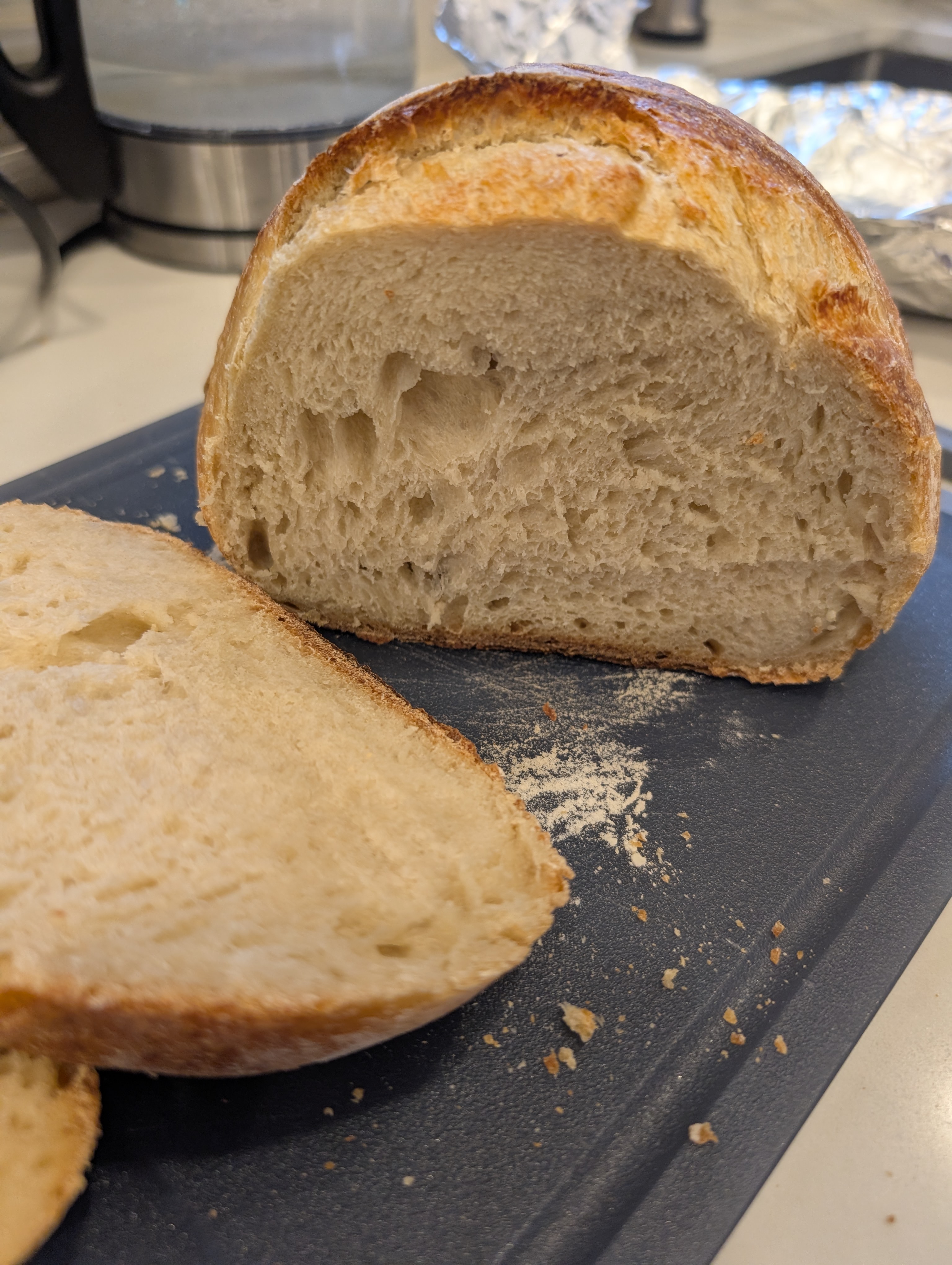
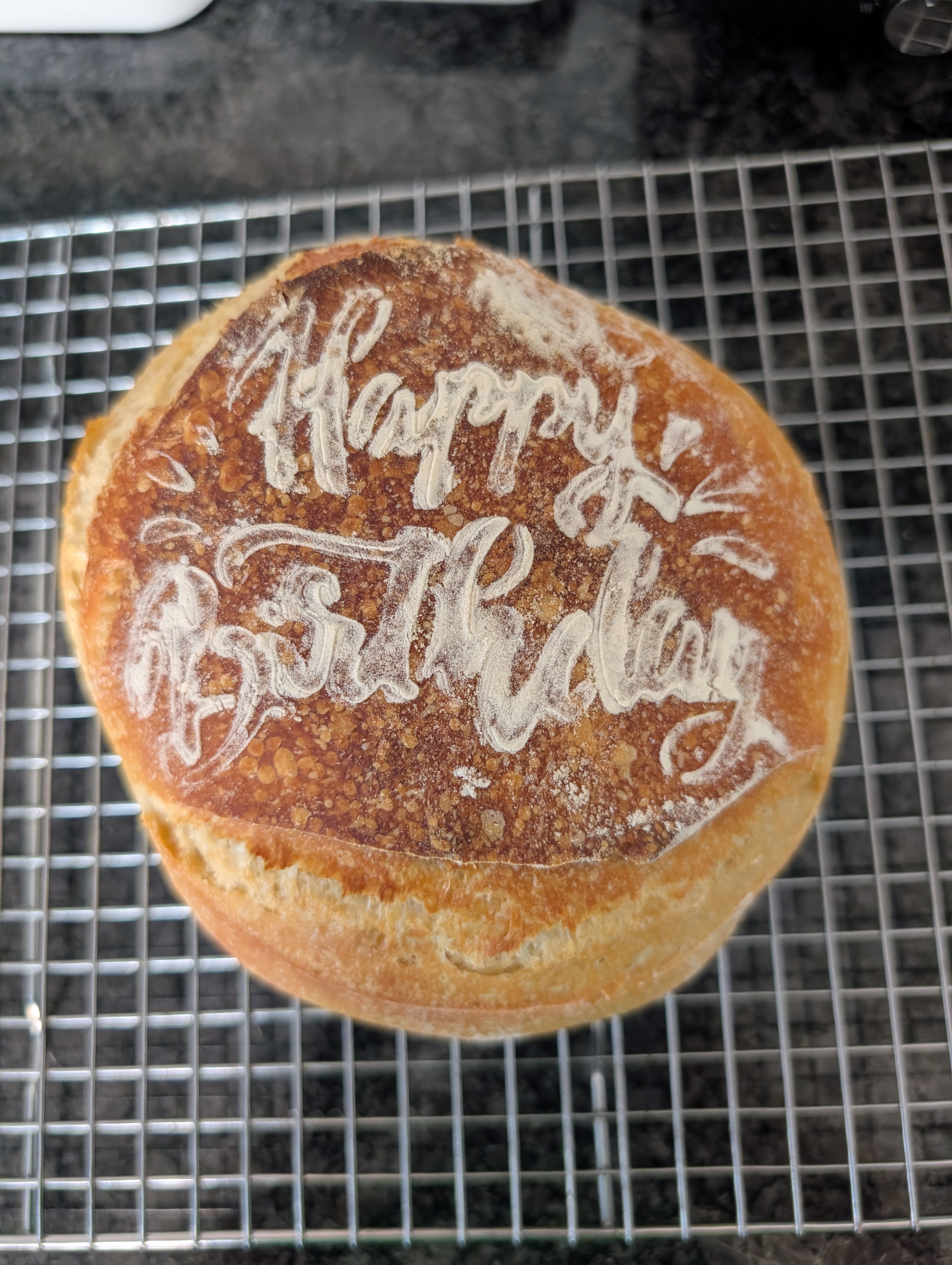
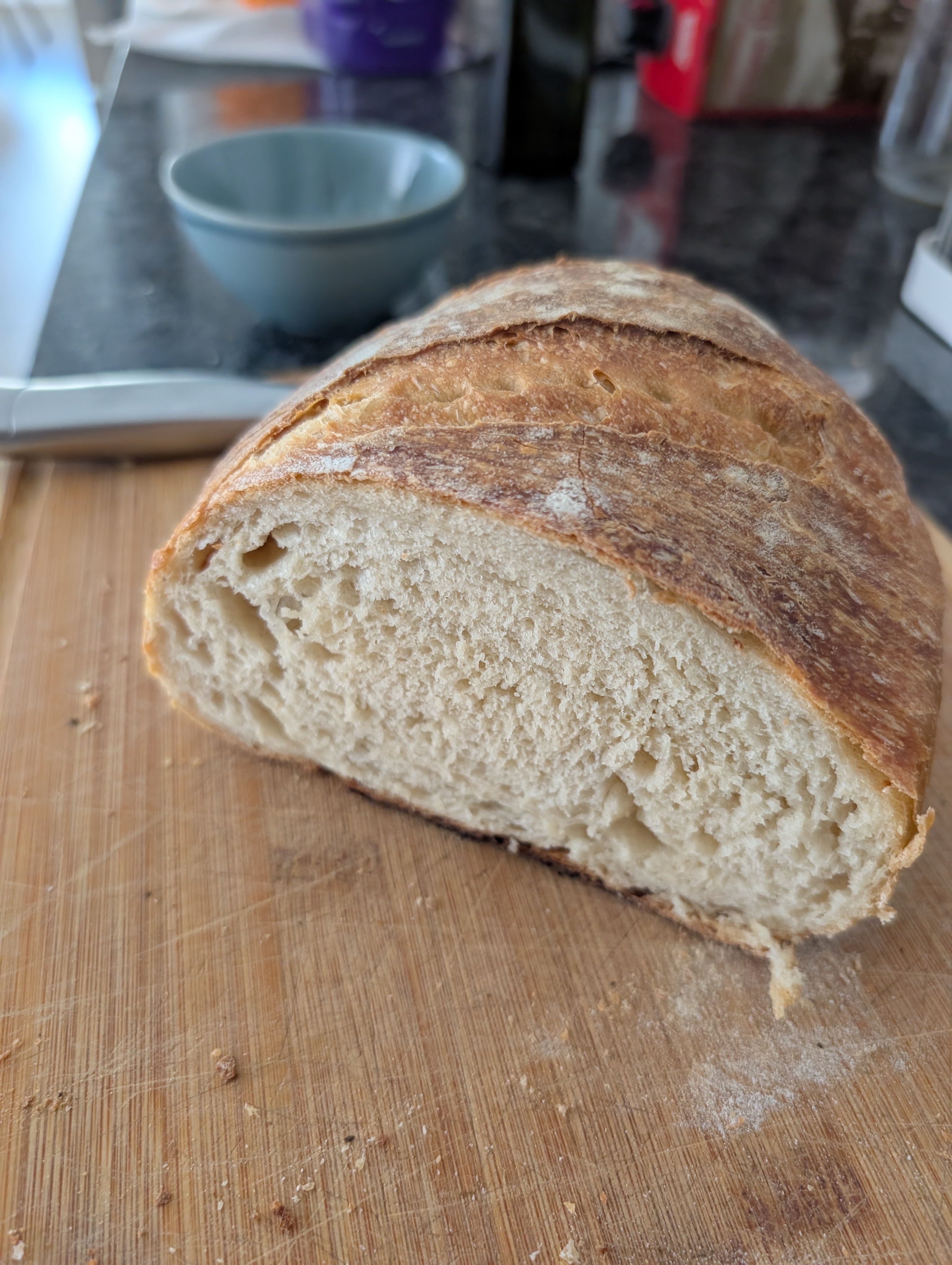
A loaf with a crisp, well-browned crust and an open, airy crumb, using nothing more exotic than flour, water, salt, and a starter we keep alive on the counter. The overnight bulk ferment does almost all the work — the active time really is just a few stretch and folds spread across an afternoon.